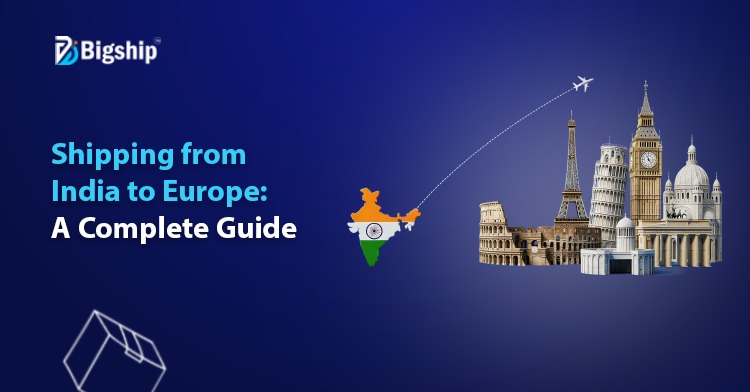
Trade between India and Europe keeps growing every year. Numbers tell the story clearly. India’s merchandise trade with the European Union touched USD 136.54 billion in FY 2025. Exports alone reached USD 75.85 billion, while imports stood near USD 60.68 billion. Europe now holds a big place in India’s global trade map as around 11.5% of India’s total trade connects to Europe.
The India–EU Free Trade Agreement (FTA) that was signed last year will cut tariffs on many products and open new trade routes for Indian exporters. Many businesses already prepare for higher demand across Europe. Clear shipping knowledge becomes important here. This blog explains key parties in the shipping process, required documents, shipping steps, permitted and restricted goods, and the typical cost of sending parcels from India to Europe.

Parties involved when shipping to Europe from India
There are several players involved while sending a parcel across Europe or any other continent. Each one handles a specific task during the shipping process.
Exporter or Sender: The exporter prepares the goods and packs them properly. The other thing to keep in mind is correct paperwork. Product details, invoice, and shipping information must stay clear and accurate.
Importer or Receiver in Europe: The receiver is the person or organization that accepts the parcel once it arrives. Import duty, VAT, and local compliance rules usually fall under their responsibility.
Freight Forwarder: They act like logistics coordinators, plan the route and also select the carrier. Many exporters depend on them during shipping to Europe because international logistics involves several steps and rules.
Shipping Carrier: Carriers move the goods across borders. Airlines handle air cargo. Shipping lines move containers by sea. While, road transport sometimes handles the last part of the journey inside Europe.
Customs Broker: Customs clearance needs careful paperwork and this stage is looked after by a customs broker. In this stage documents get checked also duties and regulations also come under review before goods move ahead.
Insurance Provider: Cargo travels long distances and it is a probability that damage or loss may happen during transit. Insurance companies provide protection against such risks.
Local Handling Agents: Ports and airports are busy places. Handling agents manage loading, unloading, and storage at these locations. Their role becomes important when cargo moves through large terminals.
What papers are needed when sending a parcel to Europe?
Paperwork decides how smoothly your shipment travels. A missing detail can stop a package at customs. Officials in both regions check documents before they allow entry. You should keep every detail clear and correct when you send a parcel to Europe. Complete and valid documents ensure that the parcel move without long delays.
Commercial Invoice: It lists the product name, quantity, price, and total value. Customs officers use this paper to assess duties and taxes on a parcel to Europe.
Proforma Invoice: Some shipments move before the final sale takes place. A proforma invoice explains the expected value of the goods. Customs authorities review it when the final invoice does not exist yet.
Packing List: A packing list describes what sits inside the package. It mentions the number of items, weight, and packaging details. Officers and logistics teams rely on this sheet during cargo checks.
HS Code: Every product carries a classification code. This code helps customs identify the type of goods. Duty rates also depend on this number.
Product Value Declaration: Authorities require the correct value of the items. Wrong declarations can create penalties or delays. Accurate value helps customs calculate taxes.
Simple steps to send a courier to Europe from India
Sending an international package may sound complicated at first. It actually follows a clear path and each stage in this path moves your shipment closer to Europe.
Pick a Reliable Courier Partner: Many companies handle global shipments. Compare price, delivery time, and service coverage. A trusted carrier plays a big role when you send a parcel to Europe.
Check Customs Rules: Europe is not one single country. Each nation in this continent follows its own customs rules. Hence, a quick check before dispatch saves time later.
Prepare the Required Papers: Documentation must always stay accurate as it is one of the most crucial thing to follow. The shipment usually needs an invoice, packing list, and \export details. Authorities review these papers before clearing a parcel to Europe.
Pack the Goods Securely: Good packaging protects the items during travel. And you must take care of this point as international shipments move through several handling points.
Arrange Pickup or Drop-off: The next step moves the parcel into the courier network. For this you can schedule a pickup or drop the package at the carrier’s facility.
Track the Shipment: Most carriers provide tracking updates that can be checked using the tracking ID that is provided by the courier companies. You can check the parcel’s location during the journey. This helps you keep the receiver informed.
Customs Clearance in Europe: The shipment reaches Europe after transit. Customs officials inspect documents and verify duties. The receiver or their agent completes this step before the parcel reaches the final address.
Items you can send from India to Europe
A wide range of products travel every day through international courier networks. Europe receives thousands of shipments from Indian businesses and individuals. Still, customs authorities check what enters their borders. Certain goods move easily during shipping to Europe, while others face strict checks.
Here are some common items that usually pass customs without major issues when documents remain correct.
- Clothing, fabric, scarves, and fashion accessories form a large share of exports to Europe. Many Indian sellers regularly ship these products through courier and cargo services.
- Handmade decor, wooden crafts, metal art pieces, and gift items also move frequently during shipping to Europe. These products often attract buyers across European markets.
- Mobile accessories, small electronics, and consumer gadgets can travel through courier shipments. The declared value and correct HS code help customs process such goods.
- Printed books, business documents, catalogs, and study materials usually move easily through international courier channels.
- Imitation jewelry and fashion accessories often appear in export shipments. Precious jewelry may require extra declaration depending on value.
Goods that cannot travel in shipments to Europe
Every country sets limits on what can cross its borders. Europe follows strict safety and environmental rules. Customs officers inspect shipments carefully. Certain goods never pass through the system during shipping to Europe. Some of the common items that remain prohibited or heavily restricted in most European countries are mentioned below.
- Explosive items, flammable liquids, toxic chemicals, and radioactive substances fall under dangerous goods and due to this courier companies refuse such items during shipping to Europe because they pose safety risks.
- Firearms, swords, knives designed as weapons, ammunition, and similar equipment face strict bans in courier networks.
- Customs authorities in Europe seize shipments that contains Narcotic substances and banned drugs immediately.
- Fake branded goods or pirated software violate intellectual property laws. European customs agencies actively stop these shipments.
- Physical cash shipments face strict financial regulations. Most countries limit the amount of currency that can enter through postal or courier channels.
- Products made from ivory or protected wildlife remain restricted under international conservation rules. These goods rarely receive permission for shipping to Europe.
Common mistakes to avoid when shipping parcels to Europe
Customs checks every parcel carefully, therefore, missing details or wrong information often cause delays. Some mistakes that you can avoid when shipping parcel to Europe are listed below.
Wrong Address: A missing postal code or incorrect street name can send the parcel in the wrong direction. Always check the receiver’s full address before dispatch.
Incorrect Product Description: Some senders write vague terms such as “gift” or “sample”. Customs officials expect clear product details. Proper item names reduce the chances of inspection delays during shipping to Europe.
Declaring the Wrong Value: Low value declarations may look tempting. Customs officers often verify product prices. Incorrect value can result in penalties or shipment holds.
Weak or Poor Packaging: Long-distance transport involves several handling points. Thin boxes or loose packing materials can damage the goods before they reach Europe.
Sending Restricted Items: Some products cannot enter Europe through courier shipments. Checking the restricted list before dispatch saves time, money, and effort.
Tips to save money on shipping to Europe from India
International courier charges can rise quickly, and to keep these costs under control you can follow these tips.
Choose the Right Packaging Size: Large boxes increase volumetric weight. Courier companies calculate charges based on size as well as actual weight. A compact package often lowers the shipping bill.
Compare Multiple Courier Services: Rates differ across carriers. One company may offer faster delivery, while another may charge less. A quick comparison helps you pick a better option for shipping to Europe.
Avoid Express Delivery When Possible: Urgent delivery options cost much more. Standard shipping usually takes a little longer but reduces the total expense.
Send Multiple Items in One Shipment: Several small parcels cost more than one combined package. Consolidating items into a single shipment often brings the price down.
Check Duty and Tax Rules in Advance: Unexpected duties sometimes create extra charges for the receiver. Reviewing import rules before shipping to Europe prevents surprise costs later.
Why choose Bigship to send a parcel to Europe?
Sending a parcel to Europe needs a logistics service provider, like Bigship, that handles international logistics with care. Bigship connects you with multiple courier partners through its user-friendly platform where you can compare shipping rates and service options before booking the shipment. Its platform also supports shipment tracking so you stay aware of the parcel’s movement. Documentation support and automated booking simplify the process for exporters and businesses. Many sellers across India use Bigship to manage international deliveries while keeping shipping costs controlled and operations organized.
Key Takeaways
- Europe holds a strong place in India’s export market. Trade between India and the European Union crossed USD 130 billion recently. This keeps parcel movement between the two regions very active.
- Indian exports to EU countries reached nearly USD 75 billion in the last financial cycle. Products such as garments, handicrafts, and machinery form a large part of these shipments.
- International shipping involves more than just the sender and receiver. Courier companies, customs officers, and logistics agents also take part in moving the parcel.
- Each European country may apply different duties and taxes on imported goods.
- A reliable courier platform simplifies the process. Many exporters prefer shipping tools that allow rate comparison and shipment tracking in one place.
Conclusion
Europe remains one of the biggest destinations for Indian exports. Parcels move across this route every day for online orders, business shipments, and personal deliveries. The process becomes easier when documents stay correct and packaging stays strong. Customs rules also play an important role before a parcel enters any European country. A little preparation on your side avoids delays and unexpected costs during shipping.
Bigship supports businesses and individuals who send international shipments regularly. It connects you with several courier partners through a single dashboard. Rate comparison, automated booking, and shipment tracking simplify the process. Many exporters rely on Bigship when they plan regular deliveries across Europe.
Send your shipments to any corner of Europe by signing up with Bigship.
FAQs
How Much Does It Cost to Send a Parcel from India to Europe?
The price depends on weight, package size, destination country, and delivery speed. Courier companies also calculate volumetric weight for large boxes. Small parcels may start at a few thousand rupees, while heavier commercial shipments cost more.
What is the estimated delivery time when shipping from India to Europe?
Delivery time varies based on the courier service you choose. Express air courier usually takes about 2 to 7 working days. Standard international shipping may take 7 to 14 days depending on the destination country and customs checks.
What you pay when shipping to Europe?
Charges normally include courier fees, fuel surcharge, and handling charges. Customs duty and VAT may apply in the destination country. These taxes depend on the product type and declared value of the parcel.
Which Items Are Commonly Sent from India to Europe?
Textiles, handicrafts, fashion accessories, books, electronics, and home decor products are frequently shipped from India to European countries through courier and cargo services.