The start of anything determines how good or bad the outcome will be. Whether it is a well-structured plan in life or in logistics, the beginning should be smooth and organized for an efficient and productive journey ahead.
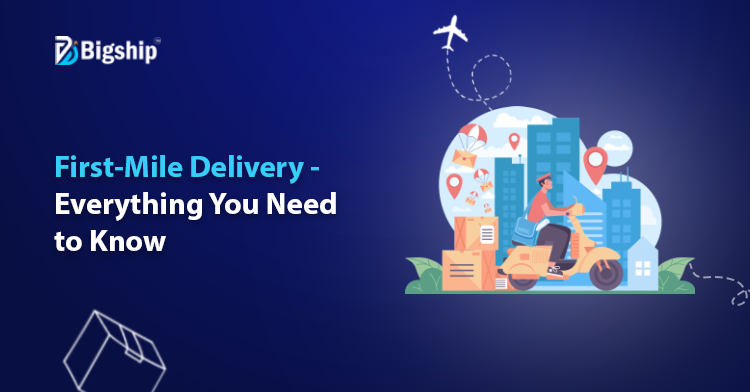
First-mile delivery may seem like a small stage in logistics, but it is a significant factor that impacts overall performance and customer satisfaction. As the name suggests, first-mile delivery involves the initial steps of moving a shipment from its place of origin into the logistics network.

In this blog, we’ll take you through the meaning of first-mile delivery, the key challenges involved, and the best practices to improve its efficiency.
What is first-mile delivery?
In simple words, first-mile delivery refers to the set of steps followed by the seller and the logistics provider to move goods from the seller to the logistics network. Before a product reaches the customer, it goes through several initial steps such as order confirmation, packaging, scheduling the pickup, and handing over the shipment to the courier partner for further processing at the warehouse.
Here is how e-commerce businesses operate in first-mile delivery:
- The order is confirmed and packed for dispatch.
- The pickup is scheduled.
- The shipment is handed over to the courier and moved to the warehouse or hub.
Why does first-mile delivery matter?
First-mile delivery is a crucial stage in the logistics process, as it directly impacts the efficiency of the entire shipment journey. Its importance can be understood in the following ways:
- It sets the foundation for the entire logistics process by preparing the shipment for further transportation.
- It decides how quickly and smoothly the shipment will move through the rest of the delivery stages.
- When the first-mile delivery is well carried out with proper attention to details, it helps reduce errors at later stages of the logistics process.
How does the first-mile delivery process work?
First-mile delivery involves a series of steps that ensure a shipment moves smoothly from the seller to the logistics network. Here’s how the process typically works:
- Order processing: The order is received by the seller from the customer and then proceeds further to pack it up accordingly.
- Packaging & Labelling: The product is packed securely, and a shipping label with all necessary details is attached.
- Pickup Scheduling: The seller arranges a pickup with the courier partner at a convenient time.
- Shipment Collection: The courier partner collects shipments from the seller or a designated location.
- Transportation to Hub: The collected shipments are transported to the nearest warehouse or sorting hub.
- Handover to Logistics Network: From the hub, the shipments are processed and forwarded into the logistics network for further delivery.
Key stakeholders involved in first-mile delivery
First-mile delivery involves multiple stakeholders working together to ensure that shipments move smoothly from the seller into the logistics network.
Sellers: They receive orders from customers, prepare the products, and pack them for pickup.
Suppliers: They supply raw materials to the sellers or warehouses, ensuring the availability of goods.
Warehouses: These are storage facilities where the final goods or raw materials are stored for production and dispatch, respectively.
Courier partners: They collect shipments from sellers or warehouses and transport them to the nearest sorting hub.
Fulfilment centers: These centers provide a variety of services such as packaging, storing, and scheduling pickups.
Key benefits of first-mile delivery in logistics
Understanding the role of first-mile delivery helps businesses avoid delays and inefficiencies. Its impact can be seen across multiple areas of the logistics process:
Improves Delivery Speed: Speed is crucial in logistics, as every customer expects the delivery to be as quick as possible to save time. An efficient first-mile process ensures that shipments enter the logistics network quickly, leading to faster overall delivery.
Reduces Logistics Costs: A well-managed first-mile enables smooth movement of goods from the suppliers to the warehouses or hubs. This reduces inefficiencies, avoids rework, and helps control overall logistics costs.
Enhances Customer Satisfaction: Customer satisfaction depends heavily on timely delivery. When the first-mile process is handled properly, it minimizes delays and improves the overall delivery experience.
Better Inventory Movement: When first-mile processes are handled efficiently, it ensures smoother downstream operations and enables a seamless flow of goods from storage to customers.
Common challenges in first-mile delivery
Understanding the challenges in first-mile delivery helps businesses identify the root causes of delays and improve overall efficiency. Here are some common issues that can impact the process:
Pickup Delays: Due to various operational issues, pickups are not always completed at the scheduled time, often because of poor coordination. Delayed pickups directly impact the overall delivery timeline.
Incorrect Packaging: Different products have different sizes and packaging requirements. Using the same packaging for all the products may cause damage to the products and may increase the chances of returns.
Labelling Errors: Shipping labels contain important details like delivery address and recipient information. Incorrect or incomplete labeling can result in delays, misrouting, or returns.
Lack of Real-Time Visibility: Limited tracking visibility during the first-mile stage can lead to communication gaps between the seller and the courier partner, making it difficult to monitor shipment status.
Inefficient Route Planning: Poor route planning can lead to longer travel times, traffic delays, and increased fuel costs, affecting the overall efficiency of the first-mile process.
First-mile delivery vs Last-mile delivery
Below is a table that clearly states the difference between both:
| Parameters | First-Mile Delivery | Last-Mile Delivery |
| Stage | Beginning stage of delivery | Final stage of delivery |
| Focus | Seller to courier hub | Hub to customer |
| Goal | Quick pickup & processing | Fast and smooth delivery |
| Impact | Affects overall logistics flow | Affects customer experience directly |
| Challenges | Pickup delays, packaging issues | Traffic, failed deliveries |
Technologies transforming first-mile delivery
Technology is playing a key role in improving how goods move and how logistics operations function. Companies are adopting advanced tools to enhance efficiency and streamline first-mile delivery processes.
Logistics Automation Tools: There are many automation tools that are very useful and can largely facilitate the shipping system. The use of label generation tools and the logistics management system can save a lot of time by reducing the chances of human error.
Route Optimization Software: Route optimization tools, including GPS and AI-based mapping systems, help identify the fastest and most efficient routes. This reduces travel time and fuel consumption, improving overall delivery speed.
Real-Time Tracking Systems: Live tracking enables better co-ordination and communication between sellers and courier partners. It provides visibility into shipment movement, which helps reduce delays and improve operational efficiency.
Future Trends in First-Mile Delivery
Many logistics companies are opting for new, advanced technological tools to upgrade their business operations and speed up the overall process:
AI-driven Logistics Planning: Companies can use AI to predict the demand graph and plan accordingly. Similarly, the AI routing can help you predict the best suitable road that saves fuel, time, and money.
Eco-friendly Transportation: Companies are saving money by switching to electric vehicles, which reduces petrol costs and saves the environment from excessive pollution.
Key Takeaways
- First-mile delivery is the starting point of the logistics journey.
- A smooth first-mile leads to faster and more reliable deliveries.
- There are some commonly faced challenges, such as delays, wrong packaging, and a lack of visibility.
- Use of technology, such as an automated labelling tool, can help tackle human error significantly and improve efficiency.
Conclusion
It is the first-mile operations that silently contribute to the overall success of logistics. Proper following of the steps involved in this stage ensures smooth transportation of the shipment and cuts delays in delivery.
By focusing on proper packaging, timely pickups, and the use of advanced technology in terms of employing an automated machine for labelling can reduce wastage of time, minimize returns, and improve customer satisfaction.
FAQs
What is first-mile delivery in logistics?
It is a set of steps that are involved in the first stage of the logistics process. It starts from the seller receiving an order online from the customer and preparing the product for transporting it to the warehouse for delivery.
Why is first-mile delivery important?
First-mile delivery supports fast deliveries, reduces returns and improves customer satisfaction. It also reduces labelling errors and further saves time in the future.
What are the biggest challenges in first-mile delivery?
There are some basic issues faced during the first-mile delivery, such as delays, labelling errors, and less visibility.
How can businesses improve first-mile delivery efficiency?
The first-mile delivery efficiency can be improved with better coordination, the incorporation of an automated tool to help generate labels and barcodes, and AI route planning can help save time and boost the efficiency of the business.
What is the difference between first mile and last-mile delivery?
The first-mile delivery involves all the activities that are essential in moving the package from the seller to the hub, while the last-mile delivery is mainly the movement of the package from the hub to customers.