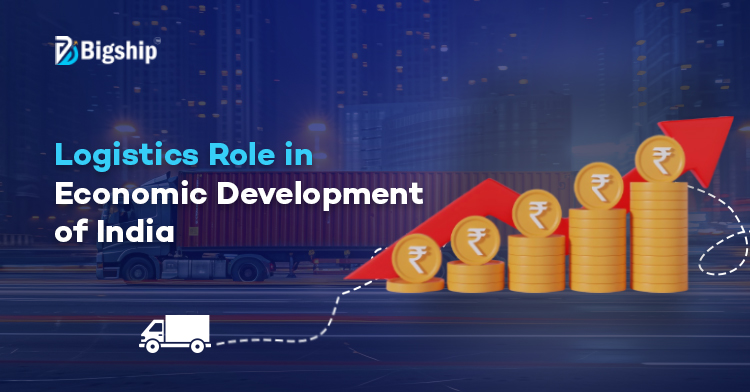
A strong logistics industry shapes how fast an economy grows. Goods reach markets on time, vendors find new clients, and organizations uncover fresh ground to expand. Better routes and smarter tools help different industries move ahead without any sudden slowdowns.

Many brands now depend on reliable logistics solutions for daily orders and large-volume shipping. Even cross-border logistics gives exporters a chance to enter global markets with confidence. Rapid shifts in logistics industry trends drive businesses to respond fast. In this blog, you will see how these factors influence economic growth.
How does supply chain logistics push an economy forward?
We all know that goods move on a daily basis, but we may not notice how much they shape your country’s growth. Strong logistics solutions help to boost a country’s economy and here’s how.
Trade becomes easier for everyone: A good logistics company helps sellers reach more buyers. Goods travel across states and even through cross-border logistics channels, products reach markets faster, thus keeping prices to stay fair. This support builds trust for small stores and big brands. Trade grows, and the economy follows the same path.
Businesses save more money: The logistics industry cuts extra costs when transport and storage work in a steady flow. Companies waste less fuel and time and warehouses pack and move items without long gaps. All these savings often reach you as better prices. Strong supply chain logistics systems keep markets active and cost-friendly.
Supply chains stay stable: Sudden events shake markets at times, such as, heavy rain, political tension, or a global crisis can slow movement. A reliable logistics solution protects the supply chain during such times. This stability keeps the larger economy safe.
Industries grow faster: Factories usually depend on quick access to raw materials. Then farmers need fast transport to markets and retail stores need steady restocks. Thus, supply chain logistics keep this circle active. When movement stays smooth, production rises, ultimately rising exports. This growth pushes the whole economy upward and adds new strength to each sector.
More jobs and skill growth: The logistics industry creates many jobs across cities and small towns. Drivers, loaders, warehouse teams, and tech specialists all find space here.
How logistics industry shapes different sectors?
The movement of goods is an everyday process that cannot be stopped or even paused. This movement supports the work of almost every sector. Several sectors that are impacted by the logistics industry are mentioned below.
Manufacturing
Factories depend on timely supplies because when raw materials arrive on schedule, production stays steady. Supply chain logistics cuts delays and reduces extra storage cost. This steady rhythm keeps manufacturing units more active and more profitable.
Agriculture
Supply chain logistics helps farmers move crops and perishable goods on time. Less spoilage means more earnings and more earnings mean stronger rural growth. Fresh produce reaches cities quickly, so food remains available at fair prices.
Pharmaceuticals
Some products, like medicines and vaccines, demand extra care. Cold chain installations safeguard vaccinations and delicate medications during transit. These steps help hospitals, clinics, and public health teams reach people on time. Smooth movement here is crucial as it often saves lives.
Retail and online stores
Shops and e-commerce brands rely on quick delivery. A strong logistics setup helps them restock stores and fulfil orders without any long wait.
Key factors that drive logistics growth in an economy
Logistics grows when key factors work together. Some of these factors that help in logistics moving are given below.
Infrastructure: Highways, ports, rail lines, and airports build the base of fast movement. Better routes cut long delays. Goods travel smoother, and sellers reach more buyers. Lower travel time often brings lower cost, which helps the entire economy grow.
Technology: Smart tools change how supply chains behave. IoT devices track goods in real time. AI systems warn businesses about delays. Digital records keep data safe. These changes reduce mistakes and help firms plan with more clarity.
Policies: Good rules can open many doors. Clear customs steps and lower tariffs help goods cross borders faster. Traders ship with more confidence. Large logistics projects often grow when public and private teams work together.
Sustainability: Many firms now choose cleaner transport and cut extra waste. These choices help the planet and save cost in the long run. Buyers trust brands that act responsibly, and investors often look for the same.
Challenges that slow logistics growth
Every economy faces certain hurdles as goods move across regions. These barriers affect cost, speed, and the overall pace of development in the logistics industry.
- Some regions still lack strong roads, ports, or rail links. Poor connectivity slows movement and raises logistics expenses. Businesses face delays that affect supply chains and market access.
- Complicated customs steps and uneven rules across borders create trade blocks. These issues hold back international shipments and discourage many firms from expanding into new regions.
- Fuel price swings, shortage of trained staff, and sudden supply chain shocks push operational spending higher. Extra cost strains businesses and limits their ability to grow.
- Transport and storage activities add to emissions. Many regions now push for cleaner methods, but the shift takes time and steady investment.
- Some developing markets still have limited access to modern logistics tools. Without strong digital systems, tracking stays weak and efficiency drops, which restricts long-term progress.
Future trends shaping logistics growth
Digital tools now guide many logistics industry trends. AI checks, IoT sensors, and secure digital records improve speed and clarity. Warehouses shift toward robots for quick picking and packing. Green choices also rise, with electric vehicles and cleaner energy gaining space.
Supply chains now focus more on stability. Firms create backup routes and better stock control to face sudden shocks. New trade corridors and modern hubs increase global reach. These changes push logistics forward and support economic growth.
How Bigship strengthen growth in logistics space?
Bigship, one of India’s leading courier aggregators, stands as a strong support system for businesses that want smooth movement of goods across cities and borders. It has multiple courier partners on its panel, and it focuses on clear processes, customer needs, and reliable supply chain logistics. Many sellers, exporters, and D2C brands use Bigship because it reduces delays, keeps shipping costs in control, and offers simple tools that help operations run without confusion.
Below is a case study of how Bigship is helpful in business expansion in a growing market.
Scenario:
A textile seller in Jaipur wanted to sell across India and explore cross-border opportunities. The brand struggled with late dispatches, unclear tracking details, and high return rates due to routing issues.
Solution:
The seller shifted to Bigship and started using its unified dashboard for booking, label generation, and order tracking.
Bigship provides the seller with multiple courier partners. Also, the platform provided the seller with instant NDR updates that helped him respond to delivery issues quickly. Bigship’s cross-border shipping options opened access to small global markets where handmade textiles were in demand.
Outcome:
Delivery delays dropped sharply in two months. The brand expanded from 6 states to 19 states within a year. International orders began to form 12% of the seller’s monthly volume. Operational costs were reduced because the seller no longer switched between different courier portals manually.
Key Takeaways
- Logistics plays a major role in how fast goods move across regions.
- Strong roads, ports, and rail links boost economic activity.
- Digital tools improve supply chain accuracy and visibility.
- Clear rules help goods cross borders with less delay.
- Stable supply chains protect businesses during sudden disruptions.
Conclusion
Logistics stands at the center of economic progress of the country. Strong networks, smart tools, and stable supply chains help businesses grow in every region. Better movement of goods also creates new jobs, supports trade, and opens global pathways for sellers of all sizes.
Bigship supports this growth through clear processes and reliable shipping options for businesses across India. It helps Indian businesses cut delays, manage orders, and reach more customers with ease.
Sign up with Bigship and start growing your business today.
What is the role of the logistics industry in economic growth?
The logistics industry ensures smooth movement of goods, supports trade, and helps businesses reach more customers, driving overall economic development.
What is cross border logistics?
Cross-border logistics involves moving goods between countries. It helps exporters reach global markets and access international buyers.
How can I reduce costs using logistics solutions?
There are several ways that can help you reduce your logistics costs. This can be done by using efficient routes, multiple courier partners, and digital tools that help lower delivery delays and overall shipping costs.