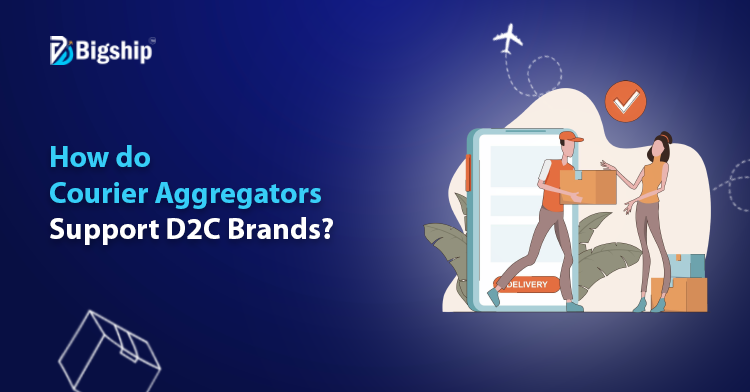
Shipping feels easy when you’re handling a handful of orders. When the business grows, the same process suddenly starts taking twice the effort. One order is waiting for pick up, another has a delivery issue, while someone is asking for a tracking update. This is where a courier aggregator starts making sense. It brings different shipping solutions together, making order fulfilment as well as last-mile delivery easier to manage. For growing D2C brands, it means spending less time chasing shipments and more time running the business.

In this blog, we’ll look at the everyday shipping problems a courier aggregator solves and why it has become an important part of growing D2C brands.
Why One Courier isn’t Enough as Your D2C Brand Grows
During the starting days of your D2C brand, you might feel that working with a single courier partner is the easiest option as there aren’t many orders that need to be managed. However, once your sales pick up, things start to change.
Your orders will begin coming from different cities, and customers will expect quicker deliveries as always. In such a scenario, the same courier you are working with may work well in one region but struggle in another and that’s when shipping starts taking more time than it should.
Here, courier aggregator makes the real difference as instead of depending on just one delivery partner for every shipment, it gives your business access to multiple courier companies through a single platform. That flexibility helps improve day-to-day logistics, whether it’s finding better service for a particular pin code, reducing the effort of managing different courier accounts separately or handling more orders during busy seasons.
Things Courier Aggregators Do for D2C Businesses
As order numbers grow, shipping starts demanding more attention than expected, and that’s a simple math. A courier aggregator takes care of many everyday problems, thus making it easier for D2C businesses to keep their logistics running smoothly in the longer run. Here are some of the tasks that logistics aggregators do for D2C businesses:
No More Jumping Between Different Shipping Dashboards
Managing orders through different courier portals can get frustrating. For instance, you need one tab for creating shipments, another for tracking. To check reports or to download invoices, you need to go somewhere else. When order numbers are low, it won’t matter much, but as they grow, this back-and-forth becomes part of the daily routine. Even a simple logistics task ends up taking longer because the information is scattered across multiple places instead of being available in a unified shipping dashboard.
A courier aggregator makes things sorted for you by bringing everything together, so you don’t have to keep switching between platforms just to complete one order cycle. This way, shipments, reports, tracking updates, and courier options stay in one place. It also becomes simpler to keep an eye on last-mile delivery without opening different courier websites every few minutes to check where an order has reached.
It Finds the Right Courier Instead of Using the Same One for Every Order
Not every courier works the same everywhere. A partner that is fast in one city might slow down in another or skip certain pin codes altogether. Yet many businesses keep sending every order through the same courier just because it is familiar. Over time, this thing brings down delivery speed and creates delays that can be easily avoided, especially once orders start coming in from across the country.
A smart courier management system takes the guesswork out. It lets you switch between multiple partners without changing how you handle orders. So, whether it is a single package or a bulk load, you can assign the courier partner that fits best for the type of parcel you are sending.
It Makes Order Processing Much Faster
When orders start coming in one after another, it’s usually the small tasks such as printing labels and generating manifests that slow everything down. Imagine you have 200 orders daily then half of your day will disappear processing each of them individually. For many D2C businesses, this becomes a bigger problem than packing the orders themselves.
A courier aggregator cuts out a lot of that extra effort. You do not have to repeat the same process for every shipment, especially when you are handling bulk shipments. That’s why many D2C brands look at it as one of those shipping solutions that simply makes the day easier, especially when order volumes suddenly shoot up.
It Simplifies COD and Payment Reconciliation
COD works well for customers, but keeping track of the money isn’t always that simple. One courier partner settles payments on a different date, another has pending deliveries, and you’re opening multiple reports just to check whether the numbers match. As orders increase, this routine starts taking more time than it should, especially for businesses handling regular e-commerce shipping.
A courier aggregator makes this a lot simple as you can check everything in one place, instead of collecting payment details from different courier portals. It’s easier to see what’s been collected, what’s still pending, and what has already been settled. That’s where logistics automation quietly helps—not by changing how COD works, but by making it much easier to keep track of it every day.
It Makes Returns and NDR Management Easier
Not every order reaches the customer on the first attempt. Sometimes the customer is not available, the delivery address is incomplete or the order gets refused at the doorstep. Before you know it, you’re checking one courier website for an update, another for a reattempt and trying to figure out which orders are getting returned.
A courier aggregator saves you from all that, so you don’t have to chase information from multiple places. Instead of hunting for updates across different platforms, you can see what’s happening from one place. It’s simple to spot orders that need a follow-up, track returned shipments and act before things pile up.
It Helps You Scale Without Increasing Logistics Work
More orders should feel like good news but for many businesses, they also mean more spreadsheets, more courier follow-ups, more tracking requests and more time spent on routine work. In this scenario, the team is busy keeping up with shipments instead of focusing on the business itself.
A courier aggregator takes a lot of that extra work off the table. You can manage more orders without making the shipping process more complicated. The same team can handle a higher order volume because everything is organized in one place. As the business grows, your logistics don’t have to become harder to manage—they need to be easier to keep under control, and this can be done by a courier aggregator.
How Bigship Helps D2C Brands Ship Smarter?
Bigship is a tech-driven logistics aggregator that makes shipping simple. Whether you are sending shipments domestic, international, or hyperlocal, you can manage deliveries without juggling multiple platforms.
- Every courier has its strengths. One might be faster in metro cities, another might cover remote pin codes better. With Bigship, you get access to 20+ trusted partners from one dashboard, so picking the right courier doesn’t mean opening multiple accounts.
- As your D2C brand grows, it is obvious that your shipping reach should also grow. Bigship with its expansive network covers 29,000+ pin codes across India and delivers to 190+ countries worldwide.
- Customers want updates on their shipments at every stage. Instead of checking different courier sites, Bigship lets you track all shipments in one place.
- Costs should be clear. Bigship’s transparent pricing shows you exactly what you’ll pay before you book.
- Cash flow matters and waiting weeks for COD payments slows business down. Bigship offers early COD remittance, so you get your money faster and keep operations running smoothly.
- If you sell through Shopify or WooCommerce, then Bigship has given a feature to integrate your Shopify and WooCommerce websites in its panel, syncing orders automatically.
- Support shouldn’t feel like a ticket queue. Bigship assigns you a dedicated Key Account Manager who knows your account and helps resolve issues directly.
- Failed deliveries don’t always have to mean returns. Bigship’s automated NDR management lets you act quickly on problems like wrong addresses or unavailable customers, reducing Return to Origin (RTO) orders.
Key Takeaways from This Blog
- A courier aggregator brings multiple courier partners together on one platform.
- One courier may not perform equally well across every location.
- Growing D2C brands often outgrow a single courier partner.
- Managing shipments from different courier portals takes unnecessary time.
- A single shipping dashboard makes day-to-day operations easier to handle.
Conclusion
As your D2C business grows, shipping isn’t just about moving parcels from point A to point B. It is about picking the right courier, keeping deliveries on track, handling returns smoothly and making sure daily operations don’t get harder with every new order. A courier aggregator brings all these pieces together in one place.
If you want a simpler way to manage shipping, Bigship makes it easier. It is a tech‑enabled courier aggregator that gives you domestic, international and hyperlocal options through a single platform so you can handle deliveries with less effort and more control.
FAQs
What does a courier aggregator actually do?
It connects you to multiple courier partners through one platform. Instead of juggling different accounts, you can book shipments, track orders and manage deliveries from a single dashboard.
Why do growing D2C brands use a shipping aggregator?
As orders increase, relying on just one courier gets tricky. An aggregator gives brands more options, makes daily shipping easier and saves the hassle of handling multiple platforms.
Can a courier aggregator help reduce shipping costs?
Yes. With access to several partners, you can pick the one offering better rates or service for each location. That way, you avoid overspending on every shipment.
Can I connect a courier aggregator to my online store?
Yes, absolutely. Most aggregators integrate with popular e-commerce platforms. For example, Bigship connects with Shopify and WooCommerce, syncing orders automatically in its panel so you don’t have to enter details manually.
How does a courier aggregator contribute to improving delivery success?
By letting you choose the right courier for each location instead of sticking to one partner. Combined with tracking and NDR management, this improves delivery rates and helps cut down on RTOs.