With the rise in the advancement of technology, e-commerce came and changed the way we shop. It enabled customers to buy anything online from the comfort of their homes. It started as a fascinating thing as people were happily shopping from online platforms that offered hundreds of options to choose from. Due to the variety and availability of options, customers can compare and get an affordable price for their products.

However, soon after its emergence, a problem of distrust and lack of reliability became a major challenge for e-commerce businesses. People were hesitant to pay online before they could receive their product in hand. Therefore, to address this, a new feature came into play that fixed the problem of trust, COD (cash on delivery).
In this blog, we will understand what COD is, how it works, and why it remains important in Indian e-commerce.
What is Cash on Delivery (COD)?
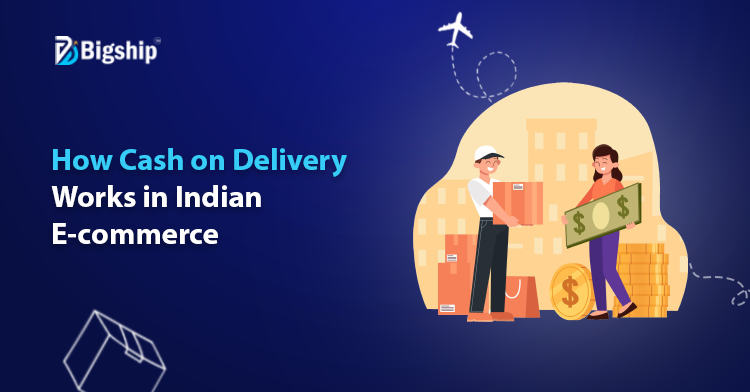
It simply means that the payment for the product that is ordered online by the customer will be made only after the delivery of the product to the customer. In simple terms, pay the delivery agent/boy once your product reaches your doorstep.
It is highly trusted and preferred over prepaid services. Especially in the Indian context, where people do not trust digital payments as much, COD was a gamechanger.
Why is Cash on Delivery popular in India?
There are various reasons why Indians are not so welcoming towards online payments, and why they prefer COD over prepaid.
- Online payments are not so trusted by the new Indian users.
- The facility of online payments is not widely available, especially in rural and remote areas.
- Bound by the natural habit of paying after receiving the product.
- Mainly Indian users fear losing money due to fraud, refund and return issues.
How does Cash on Delivery work in e-commerce?
There is a proper set of steps that are followed in a sequence which leads to a smooth and flawless delivery and receipt of the products and money, respectively. Below are the steps given in detail to help you understand how COD works.
Customer places order with COD option: The process starts as soon as a customer selects a product online and places an order for it.
Seller verifies order and serviceability: Seller receives the request and confirms the order by checking the stock. If it is available, the order will be confirmed.
Order is packed and shipped: Once the order is confirmed, the packaging and shipping of the products begin by putting labels on them for delivery.
Delivery attempt is made: The courier company sends the product to its destination to hand over the product to the customer.
Customer pays cash at delivery: Once the customer receives the product, they make the payment to the delivery agent either in cash or online.
Courier remits payment to seller: All the collected cash from COD by the courier company is then transferred to the seller within a few days.
COD vs Prepaid Orders: Key Differences
| Factors | COD | PREPAID |
| Payment timing | Payment received after delivery | Payment received before delivery |
| Inventory blocking | Inventory is blocked | Confirmed orders ensure committed inventory |
| Risk levels | Has high risks due to cancellation | Lower risk comparatively |
| RTO rates (Return to Origin) | Higher RTO rates | Lower RTO rates |
| Cash flow impact | It is delayed due to remittances | It is instant |
Advantages of Cash on Delivery for e-commerce businesses
Here are some key benefits that e-commerce businesses reap from the COD feature.
Builds trust among customers: Customers feel safe and at ease paying for the product when it is delivered to them. This whole process leads to trust-building among the customers in the long run.
Expands reach to rural markets: As we discussed earlier, digital payments are not so trusted and is not widely available; therefore, COD enables customers from remote areas to order online and enjoy the feature of COD.
Increases order conversions: Since many people choose and prefer COD as their safer option, this leads to an overall increase in the order success rate.
Reduces risk of online payment fraud: By opting for COD, customers abstain from having to share their sensitive payment details online, saving them from potential online fraud.
Challenges of Cash on Delivery for sellers
While there are benefits, there are some challenges too that sellers face frequently during the COD process. Let’s understand each of these challenges one by one:
High Return to Origin (RTO) rates: Since the order is only placed, but the payment is not instantly received, it leaves a possibility of the customer cancelling the order or refusing to take the order. This leads to reverse logistics that cost the company a lot.
Cash handling risks: Cash in hand may not be safe sometimes. The danger of theft and operational risks remains.
Payment delays: The seller does not get the money instantly; as soon as the product reaches its customer, it takes time for the courier company to remit the cash to the seller.
Inventory blockage: When a product departs from the warehouse, it is not confirmed whether the customer will accept or refuse the product. This causes a delay in the stock rolling and blocks it for some time.
Reconciliation errors: This is a hectic and time-consuming task in the system. The seller must match the amount received for each of the products sold. This poses a risk of mismatch.
What is COD reconciliation and why it matters?
COD reconciliation simply refers to the process of matching the amount of money received from the courier company with the cash on delivery amount. The seller must match each of the amounts received with each of his orders to keep the finances in check and prevent any financial loss.
There are some common problems that might occur from the seller’s end that you must know.
- Pending payments from courier partners.
- Bulk remittance confusion (multiple orders paid together).
- Manual tracking issues leading to errors.
Best practices to optimize Cash on Delivery operations
Here are some ways to avoid some major problems during the process and to optimize the COD operations properly.
Improve Buyer Verification
- The delivery of the OTP or IVR call assists in ensuring that the customer is indeed serious about accepting the order.
- It prevents fraudulent orders made using cash on delivery.
- It screens out customers who do not want the products before shipping. This ensures that the return-to-origin rate is minimized while saving on logistics expenses.
Identify and flag high-risk buyers
- Review previous orders placed by customers to identify those who often cancel or reject their orders.
- Blacklist such customers for thorough screening or block their access to cash on delivery.
- You may also impose limits on the value of their orders or demand partial payments.
Set Clear Delivery Expectations
- Offering realistic delivery timelines builds trust and sets proper expectations.
- Consumers will be more inclined to take up their orders when they know when to receive them.
- Proper timelines will help increase consumer satisfaction and proper planning.
Track Payment Status
- Always monitor when COD payments are transferred by the partner couriers.
- This is essential for detecting any delays or failure in the transfer of payments.
- This will help you manage your company’s cash flow properly.
Signs your COD Process needs improvement
Sometimes you may experience that your business may not be doing so well, but you have no idea what the problem is. Here are some signs listed below to help you identify when your COD process needs improvement.
- Increasing RTO rates: When your order gets returned too often by the customer, it may be a sign of a bad customer.
- Frequent payment mismatches: Unmatched balance sheet and unequal amount received against the total orders.
- Delayed cash remittances: When your courier takes longer than the expected or committed days, you must enquire and know what is causing the delay. Frequent delays like this can hamper the flow of cash and stock.
- High operational costs: When your businesses incurring more expenses than normal, it may be due to high RTOs and other operational tasks.
- Poor inventory turnover: This means that the stock has not been cleared for too long. This can be due to higher cancellation and failed deliveries.
Future of Cash on Delivery in Indian e-commerce
In the Indian context, the custom of COD is not going anywhere, and will remain relevant for as long as:
- New customers continue to join the digital shopping platforms, and people will be hesitant to make online payments due to the prevailing digital fraud.
- Trust takes time to be built, so till then, COD is likely to remain a preferred option.
- Some are using COD more often; on the other hand, there are people making online payments as well, which means that a hybrid of both (COD + prepaid) is emerging.
Key takeaways
- Pay at Delivery Model is a method of making payment for the product at the time of delivery, instead of paying in the advance.
- COD facilitates an increase in the number of conversions due to the digital safety and rural area people being able to order online.
- COD can significantly raise the operational cost, as there is often a risk of cancelling and refusing to accept the order.
- Due to the payment reconciliation, it could cause delay and confusion, which hampers the cash flow and stock flow.
Conclusion
COD, or Cash on Delivery, is an essential mode of payment for the Indian e-commerce sector that will help companies attract more customers and establish trust among them. However, while COD has several problems, including RTOs and delayed payments, having proper verification and tracking systems in place can reduce inefficiency.
COD is important for online sellers in India, but optimizing it is crucial.
FAQs
Explain the concept of COD in online transactions.
COD refers to a payment collection process where the payment is collected from the buyer after the product is delivered to him/her.
What is the difference between COD and prepaid orders?
COD orders are those for which payment is received at the time of delivery, and the prepaid orders are those for which payment is received at the time of placing an order.
Why is Cash on Delivery popular in Indian e-commerce?
People like to pay for their products traditionally, also due to the rising concerns of digital fraud, plus the digital payment is not so widely accepted and available in remote and rural areas.
Explain the benefits of COD for businesses.
More conversions, bigger reach, and enhanced trust among customers.