E-commerce businesses are sprouting day by day, with many new start-ups joining the club. This is leading to an increase in competition. Amid this, managing to sell enough to generate profit is hard; therefore, companies focus more on retaining their customers rather than attracting new customers to the business.
Companies use the Customer Lifetime Value (CLV) data to make strategies for retaining their existing customers. The cost of retaining customers is much less than spending on expensive advertisements and Meta Ads to add new customers to the business.

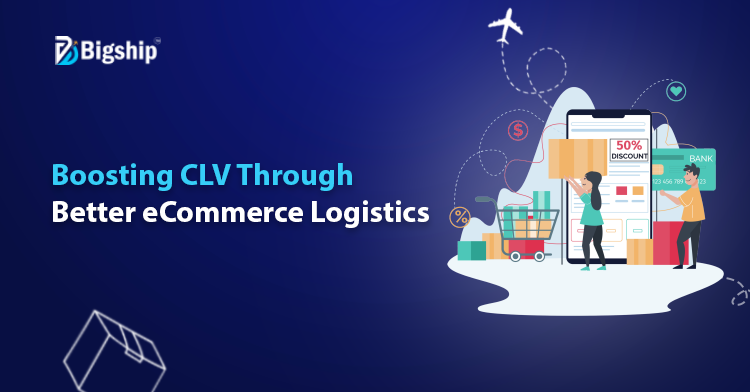
CLV not only tells you the worth of a customer over a period of time, but it also represents a lot of relatable data that is very useful to the business, and that affects business growth exponentially. In this blog, we have provided a complete breakdown of CLV and how it is affected by logistics.
What is Customer Lifetime Value (CLV)?
It is simply the worth of a customer to the business. CLV tells us how valuable and contributing a customer is to the business. This is calculated by the average amount spent by the customer on each purchase, the number of times a product is ordered, and for how long the customer has been connected to the business.
Simply put, the formula to calculate the CLV is
| CLV = | Average Order Value × Purchase Frequency × Customer Lifespan |
For instance:
A customer buys a product whose worth is INR 500, 5 times a year, for 4 years. Now, his CLV will be INR 10,000.
This is the actual value of the customer to the company.
Why CLV is Crucial for E-commerce Businesses?
Paying more to add new customers is not as profitable as retaining existing customers. Some points to help you understand the benefits of CLV to the company are given below:
- Rising ad costs: Ads are quite expensive, which makes it costly for companies; therefore, businesses must focus on retaining their old customers, as it is less costly than advertising.
- Higher profitability: Since getting new customers is expensive through advertising, retaining customers is cheaper and saves a lot of money for the company.
- Repeat purchase impact: An old customer increases the value of products on their repeat purchase. It leads to generating more revenue for the company in the long run.
The Role of Logistics in Customer Experience
Whether or not the customers stay loyal and honest with the business is dependent on the experiences they get from the business’s logistics. You may think in what way does logistic impact the customers’ experiences. Well, here is how it creates an impact:
- Once order is placed by the customer; it is in the hands of the logistics to either break or build the trust of the customer.
- The product is the first thing the customer gets to touch and feel. How the product is delivered impacts the customer experience a lot. For example, whether the product is delivered on time, broken or damaged, or not delivered at all.
- Timely delivery of the product directly leads to generating a good perception of the brand in the eyes of the customer. And there are many such customers who are willing to pay more for same-day delivery, and this shows that there are people who value time more than money.
How Logistics Directly Impacts Customer Lifetime Value?
There are numerous ways in which logistics effectively affects the customer’s lifetime value. Below are some given points in which logistics directly impacts the Customer’s Lifetime Value:
- Delivery Speed: People are very particular and serious about the timing of the delivery. It is not just a differentiator but a baseline of customer satisfaction. Early or timely delivery influences the perception of the brand in the eyes of the customer.
- Failed Deliveries: When deliveries are unsuccessful, the orders get RTO; it negatively impacts the customers and breaks their trust in the brand and services.
- Tracking & Communication: Properly updating the customers about the delivery builds trust and reduces the “where is my order” queries. This brings transparency in the system and makes the overall process smooth.
- Returns & Refund Experience: Smooth and easy return services build trust in the customers and make them loyal to the brand. A hassle-free refund on their request contributes a lot in maintaining a good reputation for the brand. When customers struggle with returns or refunds, it discourages them from making any future purchases.
Common Logistics Issues That Reduce CLV
There are some common issues from the logistics side that create problems and reduce the Customer Lifetime Value:
Poor Courier Partner Selection
Failure to choose a competent partner for the service can result in problems like delays in shipment and even delivery failures. Courier firms do not always deliver the same way across regions. Failure to monitor their efficiency can adversely affect the delivery success rate. Customers who suffer from such inefficiencies are unlikely to come back.
Invisibility of the Shipment
Customers who can’t trace their orders will have more anxiety and frustration. Invisibility of the shipment will also make it difficult for companies to be proactive in addressing problems. There will be an increase in “Where Is My Order” (WISMO) type inquiries and low trust among customers.
Regions with Higher RTO Rates
There are some regions that have shown higher levels of RTOs, owing to problems such as faulty addresses or unavailability of customers. Neglecting these trends leads to delivery issues and more RTOs. This causes a loss of trust among customers, who would be less willing to purchase again from the firm.
Complex Return Processes
If a return process is difficult or lengthy, then it becomes a problem for the customers. They may find it difficult to initiate a return process, get their refund delayed, or be unable to follow instructions on how to return their product. It becomes very difficult for customers to become repeat buyers, which affects their lifetime value.
Strategies to Improve CLV Through Logistics
As we have already discussed, how a better CLV can help generate more income and is also quite cheaper compared to adding a new customer to the business. Therefore, let us see some ways through logistics to boost the CLV.
Intelligent Courier Allocation
Logistics is driven and handled by the courier company. An experienced and reliable logistics partner can deliver the goods on time, save unnecessary costs, prevent damage, and have fewer RTOs. This helps boost the confidence of the customer in the business and makes them loyal to the brand.
Automated NDR Management
When companies handle failed deliveries systematically by updating the customer’s address and location, notifying the customer about the updates of the delivery can help reduce RTO and improve CLV.
Proactive Customer Communication
You can use a social media app or simple SMS to keep updating your customers about the delivery delays if that happens. This brings clarity and builds trust in the system. Transparency in the system strengthens the relationship between the business and its customers.
Seamless Returns Process
Many businesses lose customers due to a poor return or refund process. This area is an opportunity to make better relations with customers. Listen to their queries, respond to the refund, or return request. Quick and smooth return positively impact the customer, and they are encouraged to make many future purchases.
Data-Driven Logistics Optimization
There is always room for improvement. Look for ways to better the system, analyze the performance, and see what areas need improvement. It can be an area zone with the most delivery failures, alternatives roads for faster deliveries, and try to avoid routes that have the most traffic.
When Should Businesses Optimize Logistics for CLV?
Businesses should focus on logistics optimization before the customer experience starts getting affected. Key stages include:
Start-up brands: Create an effective process of delivery and return right from the start.
Growing companies: Improve logistics to cope with growing order numbers.
Seasons of peak activity: Get ready before the holiday season to deal with large shipments.
Look for signs: The signs that you need to optimize your online store are frequent returns of orders, issues with delivery, and declining repeated sales.
How Bigship Supports Better Customer Lifetime Value Through Logistics?
Your customer will usually remember the delivery experience as much as the product itself. Therefore, delayed shipments, failed deliveries, or poor tracking often discourage people from ordering again. Bigship helps businesses avoid these issues by offering access to multiple courier partners, wider serviceability reach, and better shipment visibility from one place.
Bigship also supports businesses with real-time tracking, automated NDR management, and dedicated assistance whenever shipping issues arise. Faster updates and better communication keep customers informed throughout the process. When deliveries become more reliable and returns are handled properly, customers naturally feel more confident buying from the same brand again. And this is how Bigship is helping businesses deliver orders more smoothly and maintain customer trust.
Best Practices to Increase Customer Lifetime Value
To increase the CLV, one should focus on the roots that bind the customers to the business. When you make sure that their hands-on experience with the products and services is good, they will naturally be loyal to your brand. Below are some points to help you increase CLV:
- Post-purchase experience: After the product is delivered to the buyer, in case there is a request from the customer for a refund or exchange of the product for any reason, make sure that the procedure is smooth, and the customer receives a quick response to their query. This improves the customer’s satisfaction and makes them trust the brand.
- Transparent communication: When the logistics handle the communication part efficiently, it builds transparency that eventually builds trust, and it creates a good image of the brand in the eyes of the customer.
- Minimize Delivery failures: Try to reduce delivery failures and RTOs, as it hampers the reputation and discourages the customers from making any future purchases.
- Invest in the Logistics Automation tools to make the process faster and more productive.
Key takeaways
- The customer experience is influenced by fast and timely delivery, ease of return, and customer communication.
- Efficient logistics, like smooth shipping and a better post-purchase experience, directly improve repeat purchases and help increase CLV.
- Failed deliveries and frequent RTOs hamper the reputation of the brand and become the root cause of customer loss.
- Transparency in the process gives clarity and establishes credibility in the brand, thus improving the CLV.
Conclusion
It is not just about delivering the product, but about establishing relations. Successful product delivery, easy communication, and convenient refunds can convert new buyers into loyal customers.
For any successful eCommerce business, it is very important to retain customers rather than just acquire them, and here lies the importance of logistics.
FAQs
What is a good CLV for eCommerce?
A good CLV depends on your category, but it should always be significantly higher than your customer acquisition cost (CAC).
How does RTO affect CLV?
High RTO leads to failed orders, lost trust, and fewer repeat purchases—directly reducing CLV.
Can logistics improve repeat purchases?
Yes, good logistics can surely improve repeat purchases when offered transparency through communication, delivery on time, and an easy return policy.
When should businesses invest in logistics tools?
You should invest in logistics tools when you see some complaints from customers related to delayed deliveries, damaged products, and return issues. Also, if you see a strong future potential and high logistic turnover, then it is highly recommended that you invest proactively in automation tools for smooth operational efficiency.