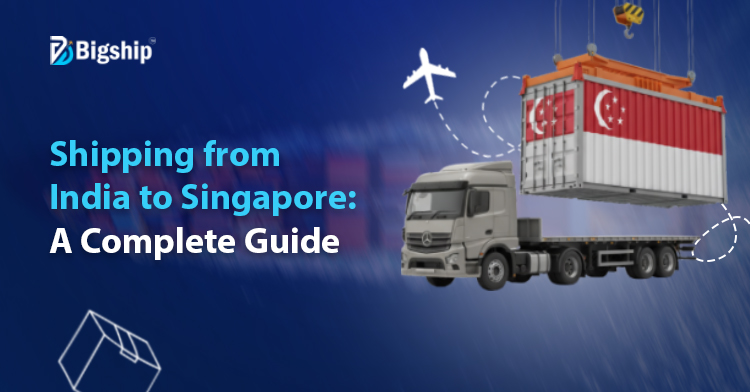
Shipping across borders often feels confusing, like costs feel unclear and rules look complex. Yet shipping from India to Singapore continues to grow every year. Many Indian businesses ship daily to this market. Apparel moves fast, agricultural goods see steady demand, and precious stones also form a major share. Trade numbers support this growth, for instance, imports from India touched USD 7.36 billion in 2021, as per UN COMTRADE data.
Singapore holds strong value for Indian exporters and acts as a major Asian trade hub. The country ranks as the 47th largest e-commerce market globally and it is estimated that its market volume may reach USD 6,692.5 million by 2027. Buyers expect speed and clarity. Sellers need reliable shipping. This guide helps you move goods with confidence while shipping from India to Singapore.

Import Taxes & Duties in Singapore
Taxes are imposed when you ship goods into Singapore, and this rule applies to almost all imports.
Goods and Services Tax (GST): GST acts as the main import tax in Singapore. Parcels valued above SGD 400 attract GST. The value comes from cost, insurance, and freight combined. People often call this the CIF value. The GST rate stands at 9% now. Earlier, it was 8%. Items priced at SGD 400 or below may still include GST at checkout. This rule applies under the Overseas Vendor Registration system. Sellers in India must add GST before sale in many cases.
Customs and Excise Duties: Some products attract extra duties. These duties apply in addition to GST. Singapore charges customs duty on selected categories only. Alcoholic drinks fall under this list. Tobacco products also attract duty. Vehicles and fuel-based products face similar charges.
Key parties involved when shipping from India to Singapore
Every international shipment involves various parties and each of their roles matters. You should know who does what during the India to Singapore courier movement. Here is the complete list of key parties involved:
Exporter or Shipper in India: This person or business sends the goods. The shipper prepares the parcel, packing happens here, and documents also start here. Export rules must match Indian laws, and clear paperwork helps the shipment move faster.
Importer or Receiver in Singapore: The receiver collects the parcel in Singapore. This party follows local import rules. Taxes and duties fall under this role. Customs may contact the receiver for details.
Freight Forwarder: A freight forwarder manages the entire shipping journey. This party plans the route. Carrier selection happens here. Many shipments get combined to save costs. Forwarders guide you through complex steps. They act as a bridge between you and carriers during the India to Singapore courier movement.
Customs Broker: Customs brokers handle clearance work. They speak the language of customs officers. Duty calculations happen here. Tax payment also gets handled. Any error can stop the shipment. Brokers reduce that risk for you.
Shipping Companies: Shipping companies move the goods physically through air or sea transport. Many well-known shipping companies in Singapore handle last-mile delivery. Tracking updates also come from them.
Documents required to export to Singapore from India
Documents decide how fast your parcel moves, and missing any of these important papers creates delays. Some of the important documents needed when shipping from India to Singapore are mentioned below:
Import Export Code (IEC): IEC acts as your export identity. Indian customs asks for it in every export shipment. No IEC means no export. You should apply for it before planning your first dispatch.
Authorized Dealer (AD) Code: Banks issue the AD code. This code links your shipment with foreign payments. The customs department checks it during clearance. Export earnings get tracked through this code.
Aadhaar Card Number: Aadhaar confirms your identity. Authorities use it for verification. It helps match your export profile with official records. Details should remain accurate at all times.
PAN Number: PAN connects your shipment to tax records. It helps track income from exports. Customs and banks both rely on this number. Wrong PAN details can stop clearance.
Step-by-step process to send a courier from India to Singapore
Sending a courier works best when you follow a clear order. This order is given below.
Check What You Are Sending: Start by looking at the item. Size matters. Weight matters. Product type matters too. Documents move easily. Food or liquids need extra care. This check helps you avoid last-minute issues.
Pick the Right Courier Partner: Choose a courier partner you trust. Experience counts here. A good partner knows Singapore routes well. Clear pricing helps you plan better. Support matters when questions come up.
Prepare the Documents: Paperwork comes next. You need an invoice, a packing list, and an airway bill with accurate details. Customs may ask for extra papers based on the item. Clean documents reduce hold-ups.
Clear Customs in India: Indian customs reviews the shipment. They check values and item details. Correct information keeps things moving. Any mismatch can cause delays.
Select the Shipping Mode: Air courier suits urgent parcels. Sea freight suits bulk shipments. Your budget and timeline guide this choice. You decide what fits best.
Track the Courier: Tracking keeps you calm. Updates show every movement. The receiver stays informed, and you can act fast if there are any delays.
Restricted and prohibited items when shipping to Singapore
Singapore follows strict import rules and its authorities enforce them seriously. You should check item eligibility before dispatch. One wrong item can stop the entire shipment. Here are the list of some restricted and prohibited items.
Illegal Drugs: Singapore bans all illegal drugs. Zero tolerance applies here. Severe penalties follow violations. No exceptions exist under any shipping category.
Firearms and Ammunition: Weapons face heavy control. Firearms need special approval. Ammunition also falls under restrictions. Shipping without licenses leads to legal trouble.
Fresh Food and Plant Items: Many fresh foods face restrictions. Plants also fall under control. Agricultural safety drives these rules. You should confirm approval before sending such items.
Protected Wildlife and Related Products: Items made from protected species stay banned. Endangered animals fall under international protection laws. Customs checks these shipments closely.
Counterfeit Goods: Fake products face strict action. Branded copies attract penalties. Customs may seize the shipment. Heavy fines may follow.
How Bigship simplifies shipping from India to Singapore?
Bigship, one of India’s top courier aggregators, makes shipping easy for you. It offers courier services to more than 190 countries, and Singapore stands as one of its key destinations. You get support at every step. The team helps with customs and documentation. Rates stay reasonable and clear with no hidden charges. The dashboard feels simple and easy to use. You can track every shipment in real time. Queries get quick replies from their dedicated support team. Delivery of shipments stays fast and reliable. Multiple logistics partners work under one platform. Bigship handles the entire journey for you.
Key Takeaways
- Singapore remains a strong export market for Indian businesses.
- Trade volume between India and Singapore continues to grow every year.
- Clear documentation plays a major role in smooth delivery.
- Customs rules in Singapore stay strict but predictable.
- Singapore ranks among the world’s top e-commerce markets, with its market expected to reach USD 6.7 billion by 2027.
Conclusion
Shipping across borders works best when every step is clear. Rules, documents, and timing all play a role. Singapore continues to attract Indian exporters due to its strong trade systems and efficient customs. Working with reliable shipping companies in Singapore helps you deliver faster and build trust with buyers.
Bigship supports you at every stage of this journey. It connects you with multiple logistics partners under one platform. Documentation support, customs help, live tracking, and fair pricing come together in one place. That makes Bigship a trusted choice for businesses shipping to Singapore.
So, sign up with Bigship and make the shipping journey of your parcel to Singapore hassle-free.
FAQs
How long does an India to Singapore courier usually take?
Most air couriers reach Singapore within three to five working days from India. Time may vary due to customs checks.
Is GST charged on all shipments to Singapore?
GST applies based on shipment value and product type. Some low-value goods also include GST at purchase.
Can you track your courier after dispatch?
Yes, most courier partners, like Bigship, offer real-time tracking until final delivery.