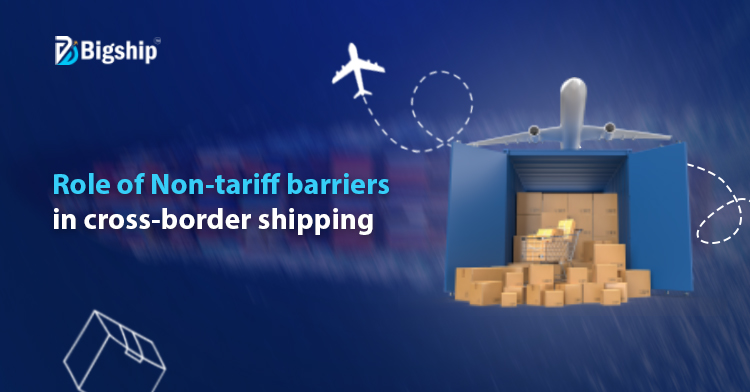
In international trade, goods keep moving across borders every day. Sometimes, price alone does not decide success. So here, non-tariff barriers or NTB play a silent role in this system. Many traders and businesses face limits without seeing any tax applied. These controls appear as checks, approvals, or conditions. NTB affects speed, cost, and planning. Shipments may wait, documents may return for review, and market entry may narrow. For you, non-tariff barriers decide how smoothly trade flows and how prepared a business must be in global markets.

In this blog, you will get to know more about non-tariff barriers, how they operate, the main forms they take, and the role they play in international trade.
What are Non-Tariff Barriers (NTB)?
You often hear about duties in international trade. However, not every restriction takes money at the border, some controls work through rules instead. These rules guide what enters a country and how it enters.
Non-tariff barriers (NTB) cover these controls. They do not add tax, but add conditions, like the requirement of extra documents or a license. Sometimes, quantity limits may also apply.
Customs clearance feels slower under such systems as officers check standards, forms get reviewed again, and approvals might take time, causing shipments to wait. These barriers shape international trade in a quiet way, as they protect local interests and regulate quality.
Major forms of Non-Tariff Barriers
There are several types of non-tariff barriers, and each affects cross-border shipping differently. Below are the key forms of these barriers in global trade.
Import quota: Governments fix a maximum limit for certain goods. Once the limit ends, no more entry happens. This protects domestic procedures and controls supply.
Mandatory Import License: Certain goods need prior approval, and importers apply for permits before shipment.
Health and safety Controls: Food, plants, and animals face strict checks by authorities who take measures to stop diseases and unsafe items. These rules can hold or reject shipments.
Origin-based Conditions: Countries ask for proof of where goods are made. This avoids misuse of trade benefits and rerouting through third nations.
Embargoes: Some goods or countries face a complete ban, which is usually due to political tension or safety risks.
Foreign exchange limitations: Control on foreign currency access affect import payments. Cross-border shipping slows when payments face restrictions.
Impacts of Non-Tariff Barriers through real-life examples
Trade rules often look simple on paper but reality tells a different story. Non Tariff Barriers show their effect through real actions and real delays. The examples given below explain how such measures influence international shipping.
- India asks imported toys to meet strict safety norms, like products must clear BIS certification before sale. Here, foreign sellers face longer approval cycles and higher compliance costs.
- The US fixes yearly limits on sugar imports, and local farmers gain protection, but exporters in other countries lose access once the quota fills.
- The EU checks food items for hygiene, pesticide levels, and animal health. Shipments move only after passing tests. These rules protect consumers. Exporters deal with added testing time and expense.
- Japan once agreed to restrict car exports to the US. This resulted in increased car prices in the American market due to limited supply.
Difference between Non-Tariff Barriers and Tariffs
Non-tariff barriers and tariffs affect prices, entry rules, and the movement of goods in very different ways across global markets. Let’s see the difference between the two.
| Non-Tariff Barriers | Tariffs |
| Use rules and conditions instead of taxes. | Use taxes or duties on imported goods. |
| Control imports through licenses, limits, and standards. | Raise import cost through customs duty. |
| NTBs focus on quality, safety, and local market control. | The purpose of tariffs is revenue and price protection. |
| Examples include quotas, certifications, and inspections. | Examples include import duty and customs tax. |
How do trade barriers shape the current trade landscape?
Trade does not move on price alone, and rules play a strong role. Tariffs raise direct costs, whereas non-tariff barriers work through control. Together, they shape how international trade functions today.
- Governments protect domestic businesses through limits, licenses, and standards.
- Low duty rates do not always mean easy access to the market. Certifications, quotas, and long reviews slow entry, impacting cross-border shipping at every stage.
- Countries use these barriers as tools in discussions. Trade rules often reflect political and economic priorities and may shift during disputes or negotiations.
- Many barriers focus on health, safety, and quality, with food, medicines, and consumer goods undergoing strict review to keep unsafe items out.
How Bigship helps you move shipments despite trade barriers?
Bigship helps you handle international shipping with clarity and control. You deal with rules, documents, and non-tariff barriers every day, but Bigship reduces that burden. You access multiple courier partners on a single platform. The system supports smoother documentation and better visibility. You can track movement without confusion and cross-border processes feel more manageable.
Key Takeaways
- Non-tariff barriers affect trade without adding any customs duty.
- NTBs are approvals, limits, and compliance requirements.
- Paperwork and reviews can slow international trade movement.
- Customs clearance becomes complex under strict regulatory checks.
- Reliable logistics support helps navigate non-tariff barriers effectively.
Conclusion
Non-tariff barriers influence trade without drawing attention. They shape entry rules, affect timelines, decide access, and taxes stay absent. Businesses adjust plans, paperwork, and pricing to stay active in international trade. These barriers often decide success long before goods reach the buyer.
Bigship supports you through such trade conditions. International shipping brings rules, checks, and non-tariff barriers. Bigship connects you with multiple courier partners and clearer shipping processes. You gain better control and visibility across borders. Trade feels more prepared and less uncertain.
Sign up with Bigship to manage global shipping with confidence.
FAQs
What are non-tariff barriers in international trade?
Non-tariff barriers are rules that control imports without using taxes. They affect entry, approval, and movement of goods.
Why do countries use non-tariff barriers?
Countries use NTBs to protect local industries, control quality, and manage safety in international trade.
Do Non-tariff barriers increase trade costs?
Yes they do. Costs rise through delays, testing, storage, and compliance, even when no duty applies.