Supply Chain Disruptions can cause problems for businesses at any time. Whether it be a delayed shipment, bad weather, busy ports or problems with your supplier there can be issues throughout the entire movement of goods, causing a knock on effect. This means you could miss delivery deadlines, incur extra costs and cause unhappy customers.
Preventing supply chain disruptions has become an everyday task for many businesses that rely on efficient delivery. However, often this will only be identified once something has already gone wrong.
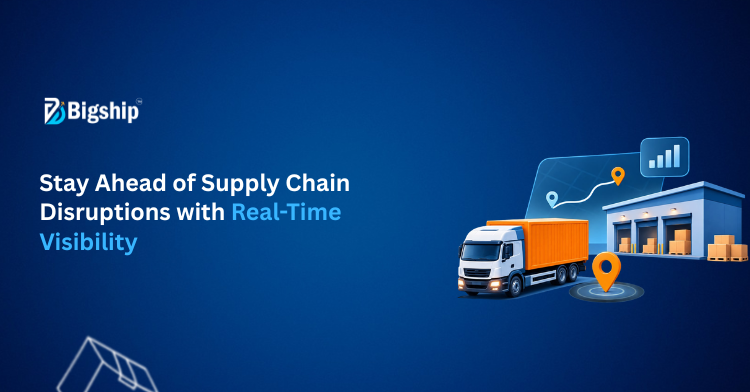
Real-time supply chain visibility enables you to keep track of shipments, spot potential delays, and ensure you are always up to date. This means you can make better decisions based on accurate up to date information. You can plan deliveries differently and avoid any issues caused by unexpected disruptions.
Let’s look at how real-time visibility helps you manage supply chain and prevent its disruptions and create a more robust system.

Common Reasons for Supply Chain Disruptions
There are many reasons why supply chain disruptions can occur. Some could be due to external factors, while others could be due to issues with your supplier, carrier or internally.
By understanding the issues you face, you can create a supply chain risk management strategy.
1. Transportation & Port Delays
One of the most common reasons for supply chain disruptions are delays within your transportation. This could be due to heavy traffic, vehicles breaking down, restricted routes or unexpected issues.
Another issue is busy ports. If you have lots of cargo going through the ports, then this could cause your shipments to get stuck for days.
Without good supply chain visibility you could be unsure as to where your shipments are and how long they will be delayed.
2. Bad Weather
Heavy rain, flooding, cyclones and snow storms can cause issues with your transportation. Roads may be closed, flights cancelled and ports shut.
Warehouses, manufacturing and distribution centres can be affected by natural disasters. This can make it hard to run your supply chain as usual.
With real-time shipment tracking you will know which routes are affected and plan alternative options.
3. Geopolitical & Trade Issues
Many international supply chains can be affected by geopolitical issues, trade issues, customs and changes in government policy.
Import duties could suddenly increase or certain routes could be restricted. This can cause issues with your shipments and increase transport costs.
These issues can be difficult for businesses to manage as you may not have much control over during the time of their implementation. By regularly monitoring your supply chain and assessing your risk, you will be able to identify any potential risks.
4. Carrier & Supplier Issues
Your supply chain will be affected by how reliable your supplier and logistics partners are. If there are issues with production delays, stock shortages, vehicle availability and poor communication this can cause issues with your entire delivery.
If your carrier does not collect your shipments on time or your supplier does not dispatch on time you may struggle to deliver as planned.
Keeping track of your shipment updates and keeping in communication with your logistics partners can help identify issues.
Why Traditional Supply Chain Management Can Be an Issue
Traditional supply chain management often relies on manually updating information, regular updates and emails/phone calls.
While this may be okay for normal situations, it can be an inefficient way of managing your supply chain with multiple disruptions.
Below are some common issues:
1. No Real-Time Shipment Updates
If your shipments are being tracked manually or you only receive occasional updates then you may not know exactly where your shipments are.
Your shipment may be delayed at a hub but you will not know until after the delivery date.
This means you won’t be able to act quickly. Real-time visibility solutions will give you regular updates so you can keep track of your shipments.
2. Poor Communication Between Stakeholders
There will be many people involved in your supply chain- your supplier, manufacturer, transporter, warehouse and customers.
If there is no quick communication between these people then even a small issue could cause problems.
The carrier may not let you know there are delays with the delivery meaning the warehouse team are preparing resources for a shipment that will not arrive.
Having better communication with your stakeholders and sharing shipment information will help.
3. Poor Visibility Across Carriers
Often there will be multiple carriers, suppliers and transporters involved with your business. This can make it difficult to keep track of your shipments.
You won’t have a central point to see which shipments are delayed, which routes are affected and where you need to prioritise.
Using supply chain management software will help you gather all the information from your different transporters.
How Real-Time Supply Chain Visibility will Help Manage Disruptions
Having real-time visibility on your supply chain means you can remain up-to-date with where shipments are being sent and operations taking place in order to manage things effectively.
Below are a few reasons why having real-time visibility will help manage disruptions in your supply chain.
Quickly Identify Issues
Identifying potential disruptions quickly is one of the key benefits of real-time visibility.
Your business can easily keep on top of where shipments are, where they are being sent and if there are any unexpected changes with deliveries.
For example, if there is a delay with a shipment as it is taking longer to arrive due to traffic you can identify the issue quickly.
It allows you to get in touch with your logistics partners quicker, change the delivery times and overall reduce the impact.
See Where Shipments Are Going
If your goods are going to multiple places and multiple transport partners it can be hard to keep track of where they are.
Being able to see exactly where shipments are and what stage they are at mean you can easily see if there are any issues.
With a good visibility solution you can easily see where your shipments are going and improvements can be made accordingly.
Spot Which Shipments Would Be Affected
Not all disruptions will impact all areas of your supply chain but sometimes certain areas would be impacted. This could be a certain transport route, carrier or distribution centre.
With real-time visibility you can easily see where shipments would be impacted.
For example, if there has been flooding on a major highway the software would show you where shipments are going through that area so you can look at alternate solutions.
This means you aren’t making unnecessary changes to shipments that wouldn’t be affected.
Quick and Informed Decision Making
Using accurate shipment information means you can make informed decisions based on the real situation.
You can decide to change the transport route, contact another carrier, change the delivery date or let the customer know there could be delays.
Having this information quickly means you can get everyone in line.
This means there isn’t as much confusion and you can act faster to keep your operations running smoothly.
Strategies to Create a More Resilient Supply Chain
To manage disruptions within your business you will want to make sure you have systems in place to manage any unexpected situations.
Here are a few strategies to help create a More Resilient Supply Chain.
1. Use Real Time Tracking
Invest in a reliable visibility system that can give you regular updates on where your shipments are.
This means your logistics team can identify any issues with delays and keep track of operations.
Your business can also make sure they are using real-time tracking to help reduce reliance on manual updates.
2. Create Alternate Transport Routes
If you rely on a single transport route it can cause issues if there is an unexpected disruption.
By creating alternate transport routes you can be more flexible.
If there are issues with road transport due to bad weather you may look at alternate delivery routes or other transport options depending on your shipment requirements.
By having alternate transport options in place you can help reduce delays.
3. Good Relationships with Logistics Partners
Good relationships with your suppliers, carriers and logistics partners can really help you manage disruptions.
Make sure you have clear communication processes to identify any issues in operations.
Regular updates, share information and clarity on who is responsible will help reduce any confusion.
With good communications you can work with multiple stakeholders to resolve issues.
4. Use Data Analytics
Looking at historic shipment data can help identify any common issues you face.
By looking at delays, carrier issues, transport costs and common areas affected by delays you can identify potential risks.
This helps you understand where issues are more likely to happen and areas to improve.
Role Of Technology In Managing Disruptions
Technology has helped businesses monitor transport, analyse and manage unexpected issues.
Modern supply chain management software helps businesses manage their transport by including tools such as:
Key technologies used to help manage disruptions include:
1. AI-Powered Supply Chain Monitoring
Using artificial intelligence helps businesses manage their supply chain.
Software can analyse large amounts of shipment data and spot any anomalies in the data.
This could include identifying frequent delays on a certain route or spotting any anomalies in shipment movements.
This helps businesses to spot any potential issues quicker.
The accuracy will depend upon the quality and availability of data.
2. Automated alerts
Monitoring shipment for any delays can take up a lot of time. Especially if the business has a high volume of shipments.
Automated alerts help make this process easier. When a shipment has an exception the team will receive a notification.
This could be because:
- The shipment has had an unexpected delay.
- It missed pickup/delivery times.
- It got diverted.
- Failed deliveries.
- Anomalies in its status.
Logistics teams will be aware of which shipments need to be prioritised.
3. Predictive Analytics
This uses past data and real-time data to spot any patterns that may cause disruptions.
For example, businesses can look at past delivery delays, weather patterns and carrier performance to spot which routes may be higher risk.
This helps to plan the shipments better.
When combined with real-time visibility, predictive analytics helps to be more proactive.
Benefits Of Being Proactive With Disruptions
Being proactive means you can plan for any disruptions. Having more visibility, good communication and risk management can give you many benefits.
1. Lower Costs
Supply chain disruptions can increase your costs while transporting, storing, holding stock and more.
Having real-time visibility means you can see any delays and put steps in place to fix them before losing out financially.
Improved route planning and shipment monitoring can also help to reduce any unnecessary transport costs.
2. Reliable Deliveries
Customers and business partners expect their shipments to be delivered on time.
While you won’t be able to avoid all disruptions, having better tracking and monitoring systems means you can respond to any unexpected delays.
This will help you plan deliveries better.
3. Improve Customer Satisfaction
Customers want to know where their order is and when it will be delivered.
If there is no updates on the shipments this can leave customers confused. Which can cause them to ask questions multiple times.
Having real time visibility of your supply chain means you can give them more accurate information regarding their deliveries. You can also let them know about any delays.
This helps to build customer confidence.
4. More Agile
Being able to adapt to changing transport situations quickly will help you be more prepared for any unexpected issues.
Having real-time information means you can change routes, work with alternative carriers and update delivery times.
This gives you more flexibility to keep everything running.
Conclusion
While disruption is something that will always happen within logistics, there are ways in which you can reduce the effect this might have on your business. Having visibility will provide this kind of protection as well as allow you to predict when disruptions will occur based on trends within your supply chain.
Disruptions such as delays in transportation and ports, disruptions caused by suppliers and disruptions caused by geopolitics are some examples of supply chain disruption.
Being able to monitor your entire supply chain in real time will enable you to identify these kinds of disruptions early and take the necessary measures to solve any disruptions or issues that might affect your shipments. With AI monitoring and predictive analysis, along with automation, your company will be better equipped to handle any disruption in your operations.
Using technology will not only assist you with gaining visibility but will enhance coordination between you and your logistics providers, allowing for a stronger and more resilient supply chain. You’ll minimise any potential disruptions that may happen during your operation. Improving visibility will help make managing disruptions easier for you.
FAQs
Supply chain disruption management is identifying, preparing for and reacting to unexpected disruptions which affect your goods. This includes assessing risks, tracking your shipments, creating contingency plans and working with logistics partners to reduce delays.
Interruptions may arise because of delays during transport, delays at ports, severe weather conditions, natural disasters, political tensions, trade restrictions, shortage of suppliers and carriers.
Real-time visibility helps you to keep up to date with the location of your goods. You’ll get notifications and updates when something goes wrong. Although you might not always prevent disruption, but it will enable you to find out about the problems earlier on.
There are a number of ways that can help you to improve resilience within your company’s logistics processes. Some strategies include:
- 1. Real-time tracking of shipments.
- 2. Alternate transport route plans.
- 3. Positive working relationship with partners.
- 4. Data analysis.
- 5. Technology.
Technology is important for your logistics business. Technologies include software systems for tracking your consignments, artificial intelligence, predictive analytics, and receiving alerts about possible risks. Technology allows you to monitor the movement of goods effectively.