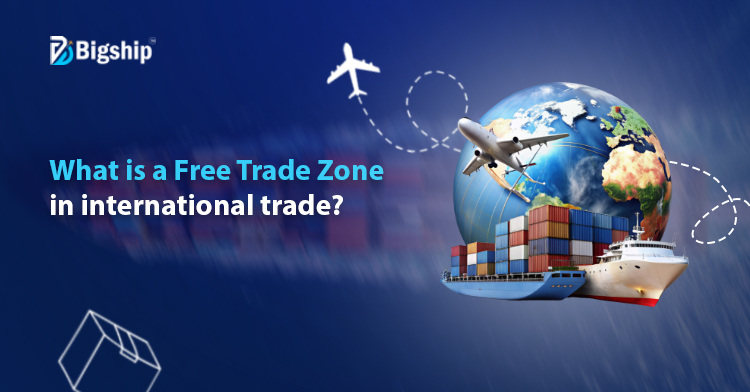
A free trade zone is an important part of today’s economic system, especially for companies that move goods across borders. The idea behind this is still simple, a country sets apart a place where conventional customs laws don’t apply, which offers firms more freedom to move, store, or change their products.

You may see many free trade companies use these zones to manage cost, reduce duty pressure, and plan shipments with greater control. The core FTZ meaning links to this special status, where goods inside this zone are not considered part of the country’s customs space until they enter the local market.
In this blog, you will see how a free trade zone functions and how this structure helps companies handle global movement in a stable, cost-friendly, and organized way.
What does a Free Trade Zone or FTZ mean?
Free trade plays a huge role in how things flow across borders, and a free trade zone is a simple part of that system. It is a specialized area inside a country where goods do not follow normal customs rules. The goods enter this zone, stay there, get packed or changed, and leave again without regular duties. This special setup explains the basic FTZ meaning and helps goods move without extra cost at the start.
These zones assist international trade to flourish in a practical way, and they do so by decreasing delays and giving companies a controlled space to manage commodities. Most of the free trade zones sit near ports or airports, which makes movement faster. Businesses use them to cut or delay duties, especially when the goods travel out to other countries.
Main functions inside a Free Trade Zone
A free trade zone offers a set of simple yet useful features that support smooth business trade operations. Some of the functions that are conducted in this zone are listed below.
- Goods enter the zone without immediate import duties. The payment starts only when the goods move into the local market. This gives companies better control over cash flow and helps them plan more clearly.
- Many free trade zones use quicker procedures and fewer steps. This in turn, reduces long delays and helps cargo move at a steady pace, which supports efficient trade activity.
- Companies can work on goods inside an FTZ, such as carrying out assembling, repacking, labeling, or even light manufacturing. These changes happen before the goods reach buyers or return to global routes.
- If the cargo is in a free trade zone, it means that it is in a controlled space. Companies can manage stock, prepare shipments, and handle tasks without dealing with early customs pressure.
Key benefits of FTZ for modern business
A free trade zone gives companies a wide set of advantages that support growth, cost control, and smarter management across different markets.
Lower overall cost pressure: Many firms choose FTZs because the duty cycle stays lighter. Duties apply only when goods enter the local market. Goods that leave the country often skip these charges fully. This reduces early expenses and keeps cash flow steady. Even waste or damaged items avoid unnecessary duty costs.
Flexible stock control: Companies hold goods in the zone for long periods without added duty. This helps them respond to slow seasons, sudden demand, or shifting market needs. Stock planning becomes more balanced, which helps avoid rushed decisions.
Faster cargo movement: Rules inside FTZs often stay simpler than outside systems. This reduces waiting time and helps firms move goods faster across different trade routes. It supports reliable delivery schedules and helps reduce shipment delays.
Better cost control on storage: Long-term storage inside an FTZ does not raise extra customs costs. This lets businesses hold large volumes safely during uncertain demand cycles.
Stronger global reach: A company can use the zone as a base to enter new markets. Goods can shift between countries without facing repeated duty charges at every step. This opens doors to expand business trade without any heavy upfront costs.
Cleaner internal planning: Free Trade Zones help firms separate domestic and export operations. This type of clear structure reduces errors and supports smooth FTZ management.
How Bigship can support your Free Trade Zone operations?
A free trade zone works best when your shipping partner handles worldwide movement with precision, and this is where Bigship brings real value. You get access to international delivery across 195+ countries, which helps you move goods in and out of the zone without delays.
Bigship gives clear tracking, organized documentation flow, and reliable carrier options. These features help you handle exports with ease. You also gain steady support for duty-related documents, shipment planning, and global dispatch schedules. This keeps your FTZ activity stable and helps your products reach worldwide markets on time.
Key takeaways
- A free trade zone is a marked area where normal customs rules pause.
- Goods inside the zone avoid early duties until they enter the local market.
- FTZs help businesses control costs and plan trade activities with more stability.
- FTZs sit near major ports or airports, which helps with quick cargo movement.
- Many free trade companies use FTZs to manage global operations efficiently.
Conclusion
A free trade zone gives businesses a space where trade rules stay lighter and movement becomes much easier to manage. In this zone, goods can enter, stay, change, or leave without any duty pressure. An FTZ also creates a stable link between storage, production, and export.
Bigship supports this system through strong global shipping coverage and clear operational support. Its reach across 195+ countries helps companies move goods in and out of free trade zones.
FAQs
What is the basic FTZ meaning?
FTZ or free trade zone refers to a special area inside a country where goods stay free from normal customs rules until they enter the domestic market.
How does a free trade zone help businesses?
A free trade zone helps businesses in many ways. It reduces early duty costs, supports flexible storage, and allows product changes before goods move to local or global markets.
Are goods taxed while inside an FTZ?
No, duties apply only when the goods leave the free trade zone for domestic use.